

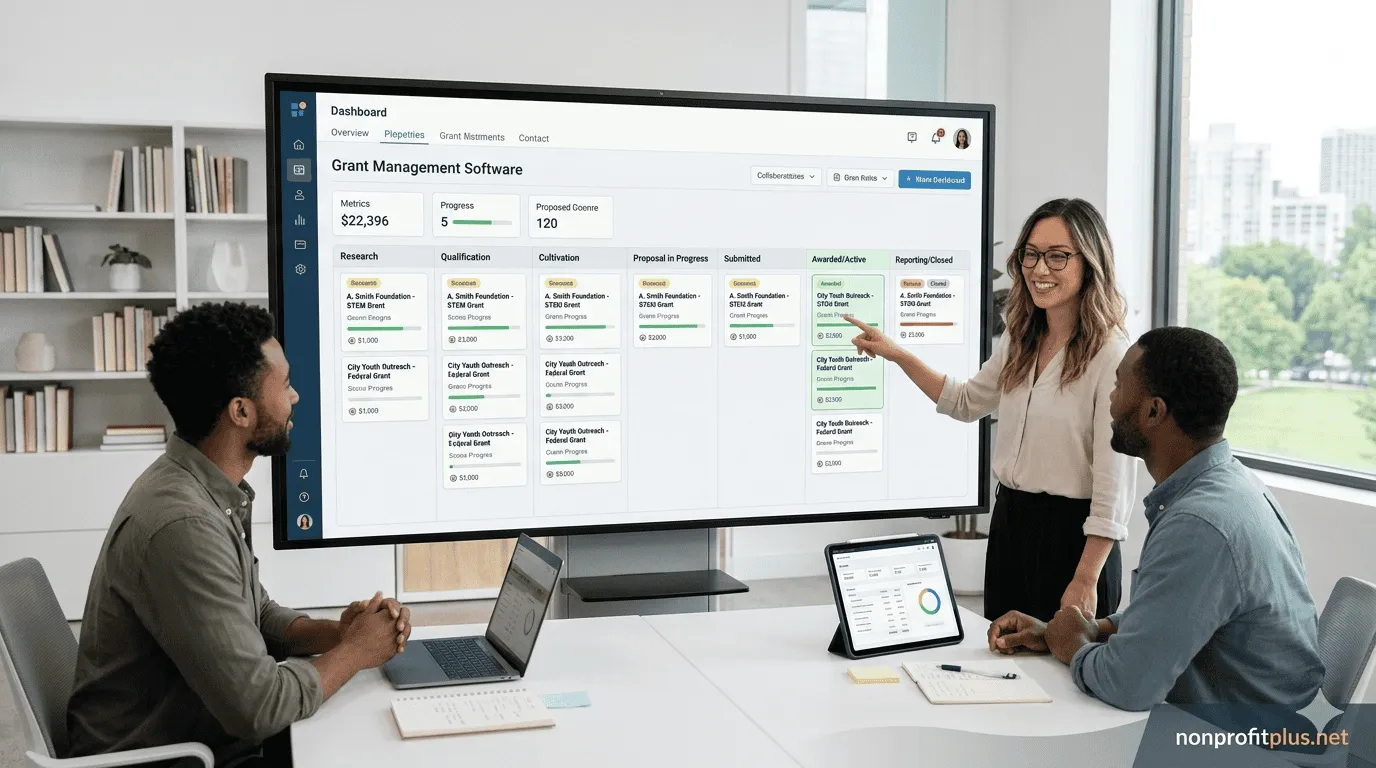
Many grant teams run on a patchwork of spreadsheets, flagged emails, and shared folders. It works until it doesn’t. Deadlines slip, two people chase the same funder, and no one can answer a simple question: how much funding is realistically in play right now?
A grant tracking pipeline replaces that scramble with a visual, stage-based view of every opportunity. It brings clarity, accountability, and the ability to predict cash flow. This guide walks through how to build one.
The philosophy of the pipeline
A pipeline is more than a list of deadlines. It is a relationship-management tool that mirrors how funding actually develops, from first awareness of an opportunity through award and reporting.
The most important insight is that win rates are driven by the work you do before submission. Qualifying opportunities well and cultivating funders early matters more than writing faster. The pipeline makes that pre-submission work visible and disciplined.
Step 1: Define your lifecycle stages
Map the stages every opportunity moves through. A common structure looks like this:
- Identification and research
- Qualification (a go/no-go decision)
- Cultivation
- Proposal in progress
- Submitted and pending
- Awarded and active
- Reporting and closed
A Kanban board works well here, with each opportunity as a card you move from one column to the next. Anyone can glance at the board and understand where things stand.
Step 2: Establish your data architecture
Decide what information every opportunity carries. At a minimum, capture:
- Funder and program name
- Internal lead responsible for the opportunity
- Ask amount versus expected amount
- Probability percentage
- Weighted value
Weighted value is simply the expected amount multiplied by probability. A $100,000 opportunity at 50% probability contributes $50,000 to your weighted pipeline. Summing weighted values across all open opportunities gives you a realistic funding forecast.
Step 3: Centralize your document repository
Grant applications repeatedly require the same supporting documents. Store them in one shared, current location so no one rebuilds them under deadline pressure. Common items include:
- IRS determination letter
- Current board list
- Audited financial statements
A single source of truth here prevents version confusion and saves hours on every submission.
Step 4: Run a tactical writing process
Treat proposal writing as a managed process, not a last-minute push. A reliable rhythm includes:
- A kickoff to assign roles and confirm requirements
- A data gap analysis to identify what you still need
- An internal review completed at least 72 hours before the deadline
That buffer leaves room for feedback, corrections, and the inevitable technical hiccup with a submission portal.
Step 5: Build a compliance and milestone calendar
For every awarded grant, log reporting dates, milestones, and compliance obligations in a shared calendar tied to the pipeline. This keeps post-award commitments from falling through the cracks once the excitement of the award fades.
Step 6: Automate reminders and notifications
Manual reminders fail. Configure automated alerts for upcoming deadlines, stage changes, and report due dates so the system prompts the right person at the right time. This is where dedicated grant management software earns its keep.
Step 7: Analyze your pipeline health
A pipeline is also a source of strategic insight. Run a quarterly audit and look at:
- Cost per dollar raised across your funding sources
- Diversification, so you are not overdependent on a single funder
- Conversion rates between stages to find where opportunities stall
These patterns tell you where to invest effort next year.
Why doing it manually costs money
Manual tracking feels free, but it has real costs: missed deadlines, duplicated effort, and opportunities that age out before anyone follows up. A structured pipeline recovers that lost value and makes your forecasting credible.
Final thoughts
Building a pipeline is mostly about discipline and a shared structure your whole team can see. Start with clear stages and a single document repository, then layer in weighted values and automation as you go.
If you would like to see how a connected pipeline and accounting work together in one place, you can schedule a demo and walk through your own funding scenarios.