Imagine an organization is halfway through the fiscal year, and they realize they’ve
overspent on several projects. Due to limitations in encumbrance accounting, there
is little room for essential expenses and effective budget control.
Encumbrance accounting provides a method to track and manage future financial
commitments. By recording expected expenditures as encumbrances, organizations
can ensure they stay within budget and avoid unexpected shortfalls. However, if your
encumbrance software isn’t integrated, scalable, or built for the diverse needs of
nonprofits, it can lead to budget oversights down the line.
Nonprofit organizations operate under tight budget constraints and strict regulatory
requirements, making effective financial management crucial. Encumbrance
accounting allows organizations to track committed funds and ensure spending
aligns with budgetary plans. By recording encumbrances, nonprofits can anticipate
future expenditures, prevent overspending, and ensure funds are available for critical
projects and operational needs.
Additionally, encumbrance oversight helps nonprofits maintain transparency and
accountability, key components for regulatory compliance and donor confidence. It
ensures that all financial commitments are documented and monitored, reducing
the risk of financial mismanagement.
This proactive approach safeguards the organization’s financial health and supports
its mission by ensuring that resources are allocated efficiently and responsibly. Implementing encumbrance accounting is, therefore, not just a best practice but
a necessity for sustainable and compliant nonprofit operations.
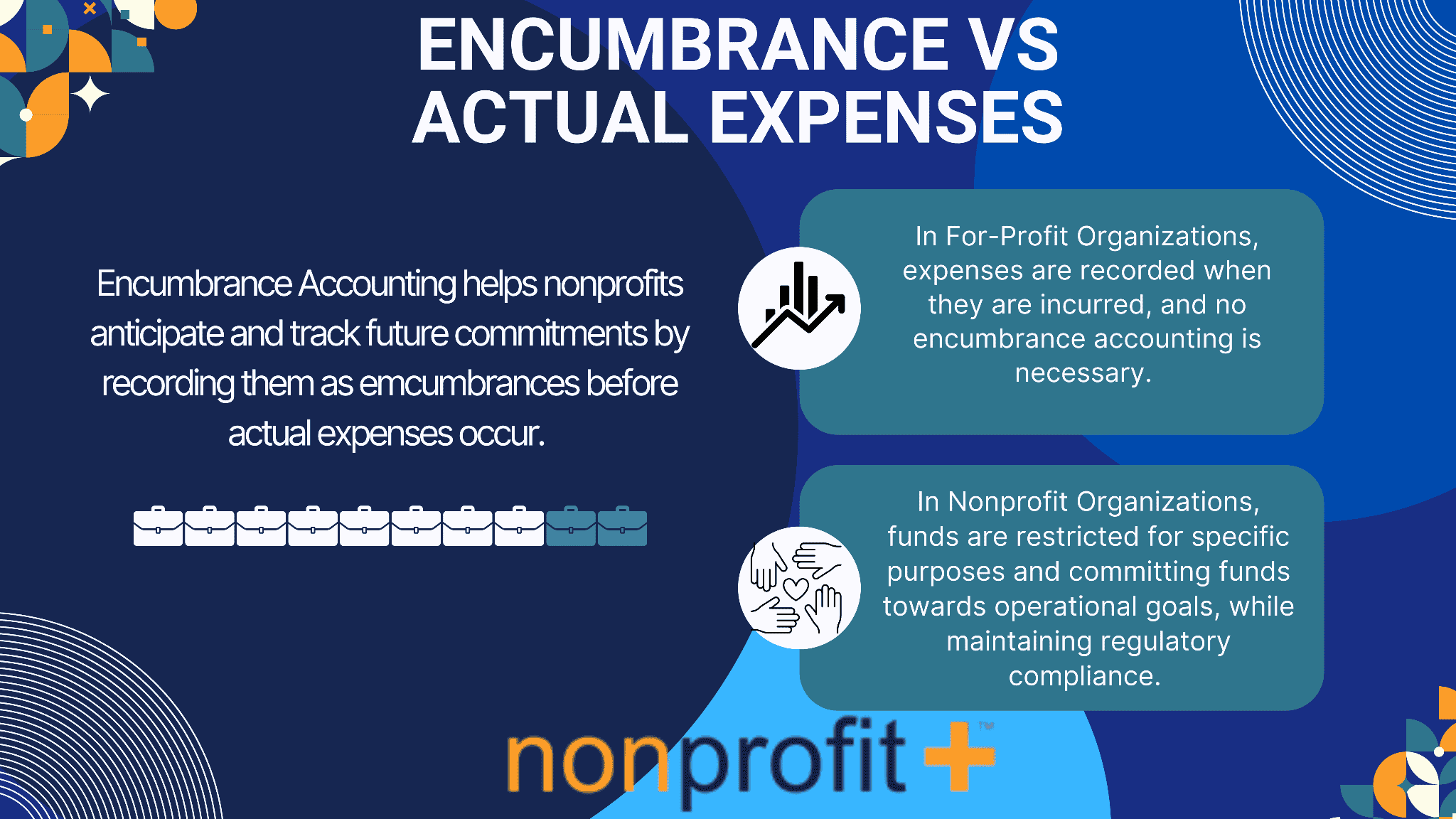
Encumbrance accounting differs significantly from traditional for-profit accounting
models, particularly in handling future financial commitments. In for-profit
organizations, expenses are typically recorded when they are incurred. However, for
nonprofits, the focus is on budgeting and managing funds that are often restricted
or allocated for specific purposes.
In short, encumbrance accounting helps nonprofits anticipate and track these
future commitments by recording them as encumbrances before actual
expenses occur.
This method provides a clearer picture of the organization’s financial obligations and
available resources. It ensures that funds are not overcommitted and that there is
sufficient budgetary room for essential expenditures. Nonprofits must be meticulous
in managing these encumbrances to avoid financial shortfalls and to ensure
compliance with donor restrictions and regulatory requirements.
The encumbrance accounting process involves several key steps to ensure accurate
tracking and management of financial commitments.
First, organizations identify and record all anticipated expenses as encumbrances in
their accounting system. This process includes setting aside funds for future
obligations such as vendor contracts,, events, tasks, services and ongoing projects.
Each encumbrance is then monitored and automatically adjusted as actual expenses
are recorded.
The next step is periodically reviewing and reconciling these encumbrances against
actual expenditures. This step ensures the budget remains accurate and up-to-date,
allowing for informed financial decision-making. By consistently tracking and
managing these commitments, nonprofits can maintain better control over their
budget, avoiding overspending and ensuring that funds are allocated appropriately.
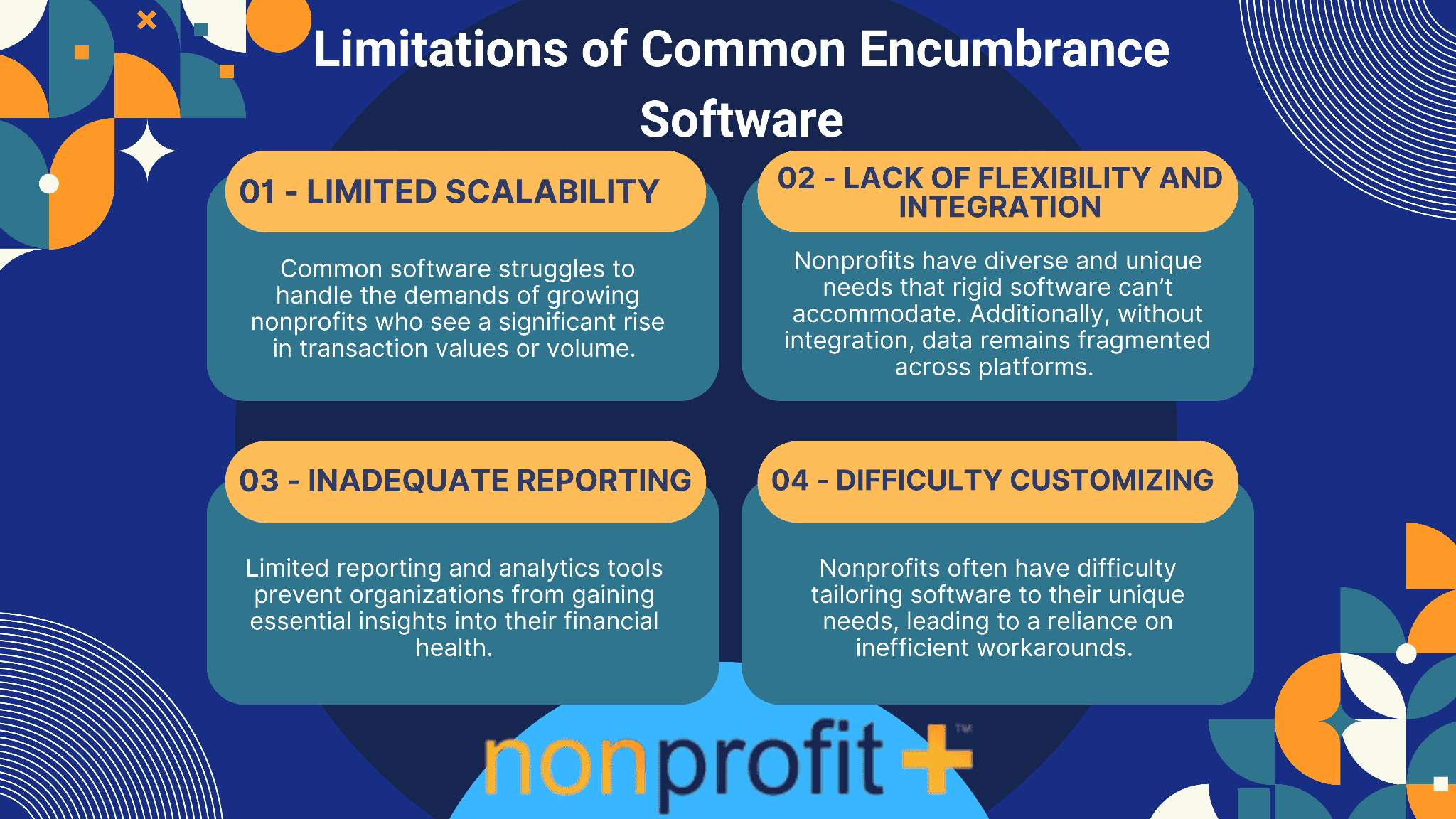
While encumbrance accounting is a powerful tool for nonprofits, modern
encumbrance software often has limitations that can hinder its effectiveness. Many
of these systems lack the scalability and flexibility required to handle nonprofit
organizations’ diverse and evolving needs. As nonprofits grow and their financial
management needs become more complex, the software they rely on may be
unable to keep pace, leading to inefficiencies and potential errors in financial
reporting.
Another significant limitation is the inability of some software to integrate seamlessly
with other financial systems and processes. This can result in data silos, where
information is fragmented across different platforms, making it challenging to
maintain a cohesive and accurate financial picture. Nonprofits need robust and
adaptable solutions that can address these issues and support their unique financial
workflows.
Common limitations of nonprofit encumbrance accounting software include the following:
NonProfit+, built on the award-winning Acumatica framework, offers a revolutionary
approach to encumbrance accounting that is efficient, transparent, and enjoyable.
With a consistent user interface and user experience across all tabs, modules,
screens, and reports, NonProfit+ ensures a seamless experience.
The software is designed to be configurable to the unique needs of your nonprofit,
allowing you to implement, partially implement, or leave out various modules and
suites. This flexibility positions you perfectly for the future with a system that can be
easily built out or integrated with other systems as your organization grows.
Built on the renowned Acumatica framework, NonProfit+ offers an exceptional
encumbrance accounting solution tailored specifically for nonprofits. With a
user-friendly interface and consistent experience across all modules, NonProfit+
allows you to configure the software according to your organization’s unique needs
Whether you need to implement all modules or just a few, this software adapts to
your requirements and prepares you for future growth, seamlessly integrating with
other systems as necessary.
Unique features of NonProfit+ Fund Accounting Software include:
NonProfit+ empowers nonprofits with the tools they need for meticulous and
transparent financial management, ensuring that their focus remains on
advancing their mission.
Effective encumbrance accounting is crucial for nonprofits to manage future
financial commitments, maintain budget control, and ensure regulatory compliance.
While traditional encumbrance software often falls short due to limitations in
scalability, flexibility, and integration, NonProfit+ offers a comprehensive solution
tailored specifically for nonprofits’ unique needs.
NonProfit+ is built on the award-winning Acumatica framework, providing a scalable,
flexible, and fully integrated platform that addresses nonprofit organizations’
common challenges. With advanced reporting and analytics capabilities,
configurable features, and seamless integration with other systems, NonProfit+
empowers nonprofits to manage their finances efficiently and transparently.
Ready to revolutionize your nonprofit’s financial management? Contact us today to
learn more about how NonProfit+ can help you achieve your mission with greater
efficiency and control.
Encumbrance accounting helps nonprofits track future financial commitments,
allowing organizations to see their available funds more clearly. This proactive
approach ensures that funds are reserved for specific purposes, improving overall
budget management and preventing overspending.
Nonprofits often struggle with the complexity of tracking multiple encumbrances,
integrating encumbrance systems with other financial software, and training staff to
use new accounting processes. Additionally, ensuring accuracy and consistency in
encumbrance records can be challenging without the right tools.
Encumbrance accounting records financial commitments when they are made, not
when cash changes hands or when expenses are incurred. This differs from
cash-based accounting, which records transactions only when cash is exchanged,
and accrual accounting, which records expenses when they are incurred regardless
of cash flow.
Distinguishing between encumbered and unencumbered funds helps nonprofits
manage their budgets more effectively. Encumbered funds are reserved for specific
commitments, ensuring that essential expenses are covered, while unencumbered
funds are available for new or discretionary spending.
Encumbrance accounting allows nonprofits to track and allocate funds according to
donor restrictions, ensuring funds are used as intended. This transparency helps
maintain donor trust and ensures compliance with legal and regulatory
requirements.
Encumbrance accounting helps nonprofits manage grants by tracking committed
funds and ensuring they are used according to grant terms. This prevents
overspending and ensures all expenditures are documented and reported accurately
to grantors.
Nonprofits should look for software that offers scalability, flexibility, integration with
other financial systems, robust reporting and analytics capabilities, and configurable
features. The software should also support specific needs like fund, grant, and
program inquiries and overspending protection.
Encumbrance accounting helps nonprofit leaders make informed decisions about
budget allocations, project funding, and financial planning by providing a clear view
of future financial commitments and available resources. This visibility reduces the
risk of financial shortfalls and ensures strategic resource management.
Yes, encumbrance accounting is beneficial for long-term financial planning as it
helps organizations anticipate future expenses and allocate resources accordingly.
This foresight aids in setting realistic budgets, planning for large projects, and
ensuring financial sustainability.
Without encumbrance accounting, nonprofits risk overspending, misallocating
funds, and failing to meet donor or regulatory requirements. This can lead to
financial instability, loss of donor trust, and potential legal issues.
NonProfit+ enhances the encumbrance accounting process by providing a
user-friendly, configurable platform built on the Acumatica framework. It offers
robust features like fund, grant, and program inquiries, overspending protection,
advanced analytics, and seamless integration with other systems, ensuring efficient
and transparent financial management.
Yes, we offer a fully integrated mobile app that is included with the system. The app
ensures that users stay connected and can manage their programs and grants
anytime, anywhere.