
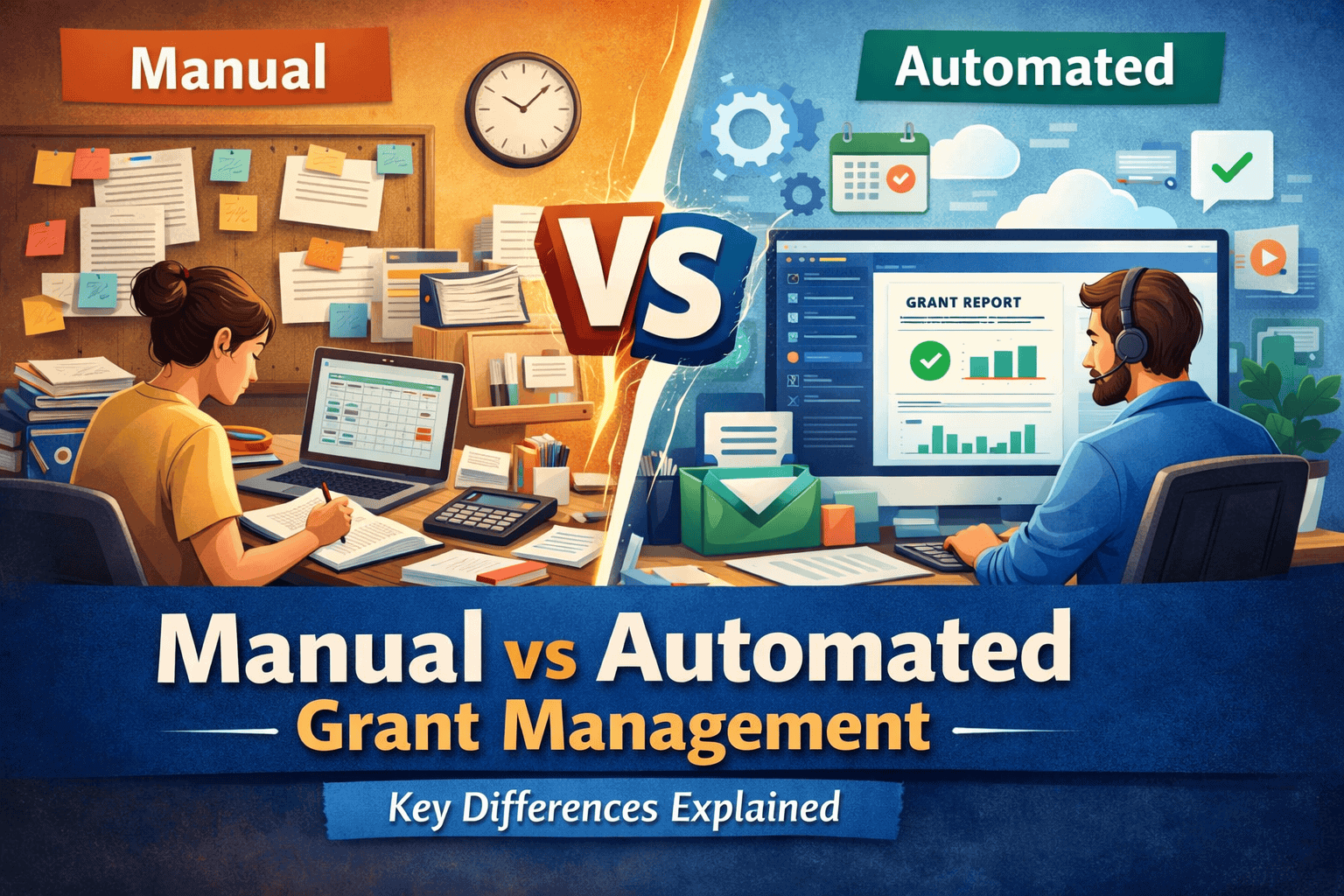
Managing grants is a complex, detail-heavy process that involves tracking applications, budgets, compliance requirements, reporting deadlines, and stakeholder communication. Traditionally, many organizations relied on spreadsheets, email threads, and manual documentation to manage grants. While this approach can work on a small scale, it quickly becomes inefficient and error-prone as organizations grow.
Today, Grant Management Software is transforming how nonprofits, government agencies, and foundations handle grant lifecycles. By automating repetitive tasks and centralizing data, organizations can save time, reduce errors, and improve compliance.
In this article, we’ll break down the key differences between manual and automated grant management—and help you determine which approach is right for your organization.
What Is Manual Grant Management?
Manual grant management refers to handling the entire grant lifecycle using traditional tools such as:
- Spreadsheets (e.g., Excel, Google Sheets)
- Email for communication
- Paper-based documentation
- Shared drives for file storage
Common Characteristics
- Data is stored across multiple systems
- Processes rely heavily on human input
- Tracking deadlines requires manual effort
- Reporting is time-consuming
Pros of Manual Grant Management
- Low upfront cost
- Familiar tools (no learning curve)
- Flexible for very small teams
Cons of Manual Grant Management
- High risk of human error
- Difficult to scale
- Lack of real-time visibility
- Time-intensive reporting
- Increased compliance risks
What Is Automated Grant Management?
Automated grant management uses Grant Management Software to streamline and centralize the entire grant lifecycle—from application intake to grant reporting and grant compliance.
Key Features of Grant Management Software
- Centralized database for all grant information
- Automated workflows and approvals
- Deadline tracking with alerts and reminders
- Reporting dashboards and analytics
- Compliance tracking and audit trails
Pros of Automated Grant Management
- Significant time savings
- Improved accuracy and data integrity
- Scalable processes
- Real-time insights and reporting
- Better collaboration across teams
Cons of Automated Grant Management
- Initial setup and implementation time
- Subscription or licensing costs
- Requires training and adoption
Manual vs Automated Grant Management: Key Differences
1. Efficiency and Time Management
Manual processes require staff to input, update, and track data across multiple platforms. This leads to duplicated efforts and wasted time.
Automated systems eliminate repetitive tasks by using workflows, templates, and triggers. For example, reminders for reporting deadlines can be sent automatically without manual follow-up.
Result: Automated grant management dramatically increases efficiency and frees up staff for strategic work.
2. Accuracy and Error Reduction
Manual data entry increases the risk of:
- Duplicate records
- Missing information
- Calculation errors
With Grant Management Software, data validation rules and centralized storage reduce inconsistencies. Automation ensures that information is entered correctly and consistently.
Result: Fewer errors and more reliable data.
3. Data Visibility and Reporting
In manual systems, grant reporting often requires pulling data from multiple sources and manually compiling it. This can take hours—or even days.
Automated systems provide real-time dashboards with:
- Funding allocation insights
- Application status tracking
- Performance metrics
Result: Faster, more accurate reporting and better decision-making.
4. Compliance and Audit Readiness
Grant compliance is one of the most critical aspects of grant management. Missing deadlines or incomplete documentation can result in funding loss.
Manual systems make it difficult to:
- Track compliance requirements
- Maintain audit trails
- Ensure consistent documentation
Automated solutions track every action, store documents securely, and provide clear audit trails.
Result: Stronger compliance and reduced risk.
5. Scalability
Manual processes may work for organizations managing a handful of grants. However, as the number of grants increases, complexity grows exponentially.
Automated systems scale effortlessly by:
- Handling large volumes of applications
- Managing multiple funding programs
- Supporting collaboration across departments
Result: Sustainable growth without operational bottlenecks.
6. Collaboration and Communication
Manual grant management often relies on email chains and disconnected systems, leading to:
- Miscommunication
- Lost information
- Delayed responses
With Grant Management Software, teams can collaborate in one centralized platform with shared access, notes, and updates.
Result: Improved teamwork and transparency.
When Is Manual Grant Management Still Viable?
Manual grant management may still work if:
- Your organization manages fewer than 5–10 grants
- Your processes are simple and low-risk
- You have limited budget for software
However, even small organizations often reach a tipping point where manual systems become inefficient.
When Should You Switch to Grant Management Software?
Consider moving to an automated solution if:
- You’re managing multiple grants simultaneously
- Reporting is taking too much time
- You’ve experienced errors or compliance issues
- Your team is growing
- You need better visibility into grant performance
Real-World Example
Imagine a nonprofit managing 25 active grants:
- Manual approach: Staff spend hours updating spreadsheets, sending reminders, and compiling reports. Deadlines are occasionally missed.
- Automated approach: The organization uses Grant Management Software to track deadlines, automate reports, and monitor compliance in real time.
The result? Increased efficiency, reduced stress, and better funding outcomes.
The Future of Grant Management
As organizations become more data-driven, automation is no longer optional—it’s essential. Modern Grant Management Software is incorporating:
- AI-powered insights
- Predictive analytics
- Workflow optimization
Organizations that adopt these tools early gain a competitive advantage in securing and managing funding.
Conclusion
The difference between manual and automated grant management is clear:
- Manual systems are familiar but inefficient and risky
- Automated systems streamline processes, improve accuracy, and enhance scalability
If your organization is looking to grow, improve compliance, and save time, investing in Grant Management Software is one of the smartest decisions you can make.
Grant management is too important to rely on outdated processes. By embracing automation, organizations can focus less on administrative tasks and more on achieving their mission.
